
 |
 |
 |
 |
 |
 |
 |
First direct evidence of ancient Mars’s oxygen-rich atmosphere
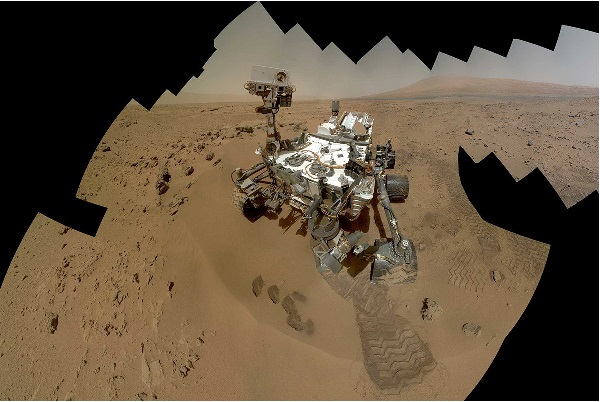
Curiosity at Galecrater
JPL-Caltech/MSSS/NASA
By Andy Coghlan
Rocks on the surface of Mars have yielded the best clue yet that the planet once had an atmosphere rich in oxygen.
Mars owesitssobriquet “the Red Planet” to theabundance of ironoxide, otherwiseknownasrust, onitssurface. Butinaddition to allthatiron, NASA’s Curiosityroverhasnowfoundsubstantialamounts of manganeseoxideinrocksinMars’sGalecrater.
“Wefound 3 percent of rockshavehighmanganeseoxidecontent,” AgnèsCousin of the Research Institute inAstrophysicsandPlanetology inToulouse, France, toldtheEuropeanGeophysicalUnionmeeting inVienna, Austria, earlierthisweek. “Thatrequiresabundantwaterandstronglyoxidisingconditions, sotheatmospheremayhavecontainedmuchmoreoxygenthanwethought.”
Mars’scurrentatmosphereis 95 percentcarbondioxideandcontainsonlytraceamounts of oxygen. Nevertheless, manyresearchershavearguedthat Mars mustoncehavebeenrichinatmosphericoxygen. Thisisthe mostdirectevidence to date, theCuriosityteamclaim.
Theroveridentifiedthemanganeseoxidewiththehelp of its ChemCam, aninstrumentwhichzapsrockswith a laserandanalysestheresultingdustcloud to identifychemicalsandminerals. Theresearchershaven’tyetpinneddowntheexactage of themanganeseoxide, buthope to dosowithfuturedatafromtherover.
Becausemany of themanganeseoxidedepositsareclose to where a lakeonceexisted inthecrater, Cousinsaysthatflowingliquidwithdissolvedoxygeninitmayhaveplayed a partinitsformation. “It’s a realpossibilitythattherewasoxygenintheatmosphere, andpossiblywateravailablelocallythatwasoxidising,” shesays.
Iftherewastoomuchoxygen, though, itmightnothavebeen a goodthingforearlylife, saysDamienLoizeau of theUniversity of Lyon, France. OnEarth, oxidationbreaksupbiologicalmolecules. Theappearance of oxygenonEarthwaslinked to organismsthatproducedit, butwas a disasterforthoseorganisms’neighbours.
“O2 isbadforlifeasweknowit, butweonlyknowlife to beable to createlargeamounts of O2,” hesays.
|
|
 |
 |
 |
 |
 |
 |
 |
 |
 |
 |
 |
 |
 |
 |
 |
 |
 |
 |
 |
 |
 |
 |
 |
 |
 |
 |
 |
 |
 |
 |
 |
 |
 |
 |
 |
 |
 |
 |
 |
 |
 |
 |
 |
 |
 |
 |
 |
 |
 |
 |
 |
 |
 |
 |
 |
